Why Your Weight Loss Has Stalled (And What To Do About It)
Written By Kris Einboden, GM and Professional Coach at The Six Pack Dad Tribe
Have you ever been working out and eating well, watching the weight fly off for a few weeks, only to have it suddenly slow down or stop altogether?
If so, you probably thought: Is my diet not working anymore? Do I need to eat less? Should I work out more? Am I doing something wrong?
For many people, this is the point in their fat loss journey where they get frustrated and quit. You were finally seeing the results you wanted, and now, despite continuing to put in the work, the scale refuses to cooperate. I've seen this happen hundreds of times throughout my career as a fat loss coach.
Your weight loss slowing down doesn't necessarily mean what you're doing has stopped working. Weight loss stalls for a variety of reasons, many of which are largely within your control. Understanding why they happen will help you push through them instead of getting discouraged, abandoning your efforts, and starting the same cycle all over again.
Defining a Weight Loss Plateau:
Let's actually define a weight loss stall. Many people mistakenly assume their weight loss has “plateaued” after a week without change, but this isn't a plateau at all.
I define a plateau as a situation where your weight and body measurements haven't changed for three consecutive weeks despite staying consistent across all your habits. True, unexplained weight loss plateaus like this are rare. I've seen maybe one or two across my career.
Typically, your weight stalls for one of two reasons: your habits slipped, or water retention are obscuring your progress on the scale.
Why Your Weight Loss Has Stalled
#1 Your Habits Slipped
Most of the time, your weight has stalled because your habits slipped. You simply weren't as consistent as you needed to be to lose weight. One common mistake I see a lot of my clients make is assuming that five or six days of consistency means they should lose weight at the end of the week .Surely, five or six days of perfect execution can't be erased by one or two bad days, right?
Unfortunately, it can and will.
For example, imagine you maintain a 500-calorie deficit every day from Monday through Friday. By Friday evening, you've accumulated a 2,500-calorie deficit. You are on pace to lose ~1 Ib of fat.
Then the weekend rolls around. You go out to dinner Friday night, enjoy some appetizers, and eat more than you normally would. Saturday brings another restaurant meal, some snacking, and a few extra calories here and there. And suddenly, without really going majorly off the rails, you just erased the 2,500 calorie deficit you created during the work week. When you weigh in on Monday, your weight is the same as it was the previous Monday.
The reason you aren't losing weight is usually right in front of you. Maybe it's the weekends. Maybe it's late-night snacking. Or maybe it’s the extra calories from restaurant meals. It’s different for everyone, but it’s almost never a mystery.
Yet, many people feel like their lack of weight loss is a mystery. Why? Because most people think very subjectively about their weight loss efforts. "I've been pretty good. I should be seeing results” is the thought process I often hear. This is wishful thinking. You need to be objective about your weight loss if you want predictable results. This means tracking the pertinent data on the habits that drive results, so you can better interpret why you’re making results or why you aren’t. Without objective data, you are just hoping and guessing.
#2: Water Retention
The second reason your weight will stall is due to water fluctuations. Your body weight typically increases by several pounds each day, mostly due to your body holding onto water. A few different factors cause water increases in the body.
First, water itself has weight - one cup of water weighs approximately half a pound. If you happen to drink a cup of water before you weigh in, you've added half a pound to the number on the scale. If you weigh yourself later in the day after eating and drinking, you'll undoubtedly weigh several Ibs more than you did first thing in the morning.
Second, when you eat carbs, your body will store some of those carbohydrates as glycogen in your muscles and liver. Your body will also store water alongside that glycogen. For every gram of glycogen stored, your body holds approximately three grams of water. So, if you eat a high-carbohydrate meal after a period of lower carbohydrate intake, you will see the scale jump by a few pounds.
Third, eating a particularly salty meal can also cause your body to temporarily retain more water. That restaurant meal, takeout dinner, or weekend barbecue could leave you several pounds heavier the following morning through purely water retention.
Fourth, working out, especially hard resistance training, causes temporary inflammation and fluid shifts as your muscles recover. This can cause you to retain additional water for a day or two after training.
Note that all these factors all cause weight gain but not fat gain. In other words: Not all weight gain is fat gain. Unfortunately, because most people don't understand what causes their weight to fluctuate, they'll believe they've gained back a ton of fat simply because they ate a meal with more carbohydrates and sodium than usual. This leads to discouragement and a subsequent drop in consistency, ultimately producing even worse results. All because of what was essentially a false alarm.
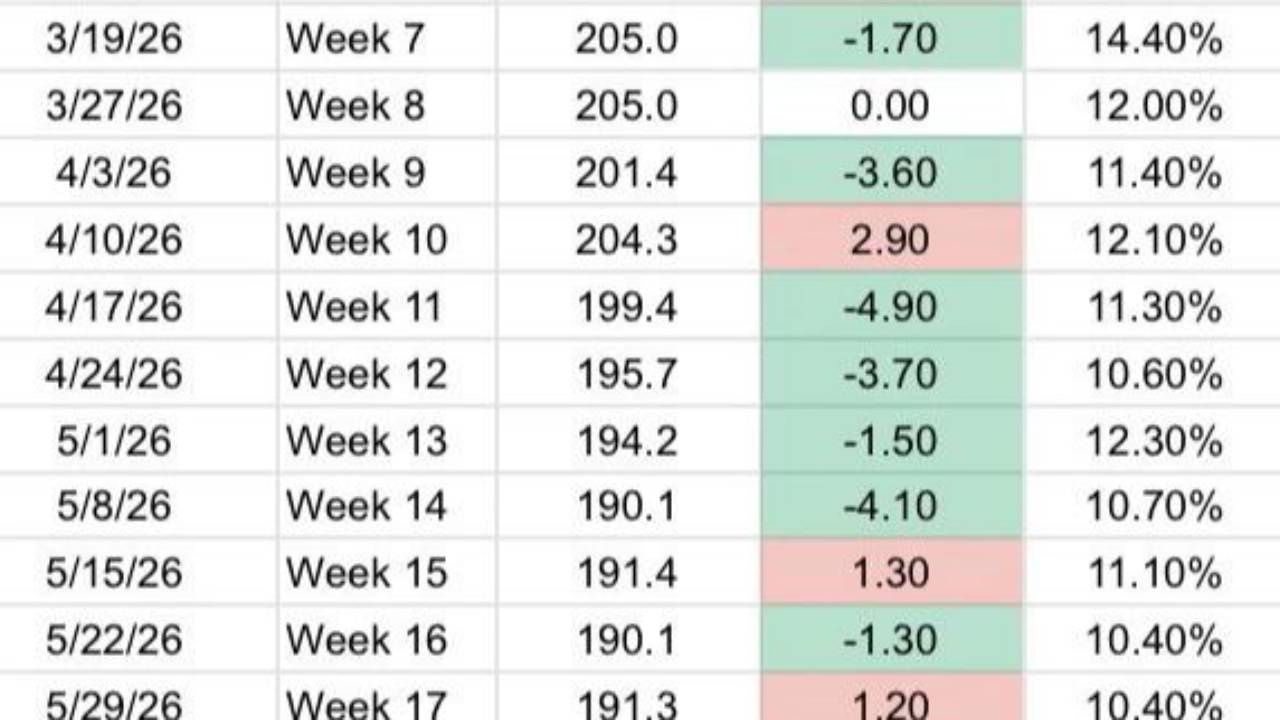
The solution is to stop obsessing over individual weigh-ins and start looking at trends. Weigh yourself under consistent conditions, ideally first thing in the morning after using the bathroom and before eating or drinking anything. Then compare weekly averages rather than individual numbers. There will be days when your weight is up, there will be days when it’s down. What matters most is that we consistently see the average go down over time.
Weight Loss Gets Harder Over Time
This is perhaps the most frustrating part of a weight loss journey. Early on, you'll often lose weight rapidly. Many people get used to seeing these rapid drops and expect that trend to continue in a linear fashion until they reach their goal weight. Unfortunately, that's not how weight loss works. The longer you diet and the more weight you lose, the slower your progress naturally becomes.
Here's why: First, a smaller body requires fewer calories to maintain. Think about it: A 250 lb man requires more energy to move around and maintain his body than a 200 lb man. As you lose weight, your total daily energy expenditure decreases. This means the calorie deficit that helped you lose weight initially becomes smaller and smaller as you lose weight.
Second, your body becomes more efficient as you lose weight. You naturally burn fewer calories performing the same activities because you have less body mass to move around. You may also unconsciously move less throughout the day as your body tries to conserve energy. This is called adaptive thermogenesis.
Third, your body pushes back against prolonged calorie restriction. Hunger hormones and appetite signals change, often making you hungrier as you lose weight. You may find yourself thinking about food more frequently, feeling less satisfied after meals, and having a harder time sticking to your nutrition habits.
All of these factors make continued weight loss more difficult towards the end of your journey. This often makes people feel like what they're doing isn't working anymore. But that's not necessarily true. It's just happening more slowly, and it will require more precision and effort to lose half a pound than it did to lose three to five pounds earlier in your journey.
Live by the Scale, Die by the Scale
Weight loss plateaus are one of the biggest reasons people quit on their fat loss journey because, naturally, losing weight is a huge motivator. When we put in the work but don't see the results, it kills our motivation and with it our consistency and subsequently our results.
What I teach my clients is to not use the number on the scale as a measure of their success. Live by the scale and die by the scale, I like to say. If your actions are solely driven by seeing progress on the scale, you will be sorely disappointed because a week’s worth of consistency does not guarantee progress on the scale. Oftentimes, scale changes are a by-product of multiple weeks of effort. This is why the scale is such a poor measure of success.
The real measurement of success in your weight loss journey should be your consistency with your habits. Consistency with habits predicts weight changes. Focus on improving your consistency, and the weight changes will come. Focus exclusively on the scale while ignoring your consistency, and prepare to be disappointed.
Having coached hundreds of people to lose weight, I have never seen anyone not succeed if they were consistent for long enough. Sometimes the body is stubborn, but it will eventually change if you give it enough time to change. The problem is very few people are patient enough to give their bodies time to change.